|
|
 |
Archive: OTHER >please note: some links may no longer be active.
'Tumbrel' Remarks I count myself as something of an expert on what writer Joyce Cary once called "tumbrel remarks." A tumbrel remark is an unguarded comment by an uncontrollably rich person, of such crass insensitivity that it makes the workers and peasants think of lampposts and guillotines. I can give you a few for flavor. The late queen mother, being driven in a Rolls-Royce through a stricken district of Manchester, England, said as she winced at the view, "I see no point at all in being poor." The Duke of St. Albans once told an interviewer that an ancestor of his had lost about 50 million pounds in a foolish speculation in South African goldfields, adding after a pause, "That was a lot of money in those days." The Duke of Devonshire, having been criticized in the London Times, announced in an annoyed and plaintive tone that he would no longer have the newspaper "in any of my houses." more from Christopher Hitchens – though not so much about the above – in Slate
Nation's Poorest 1% Now Controls Two-Thirds Of U.S. Soda Can Wealth
WASHINGTON—A report on growing disparities in the concentration of U.S. aluminum-can wealth, released Tuesday by the Department of Commerce, revealed that 66 percent of the nation's recyclable assets are now held by the poorest 1 percent of the population. According to the sobering report, the disproportionate distribution of soda-can wealth is greater than ever before, and has become one of the worst instances of economic inequality in the nation's history. Data showed that over-salvaging of cans by a small and elite group of can-horders has created a steadily growing and possibly unbridgeable gap between the rich and the mega-poor. "Although our nation's upper middle class actually consumes the most beverages, a staggering percentage of these cans wind up in the hands of a very few," said economist Cynthia Pierce, who worked as a consultant on the three-year, $14 million government study. "It's a troubling trend. And as a tiny fraction of the population continues to maintain its stranglehold on redeemable can wealth, it's a trend that shows no sign of slowing." According to Pierce, the study points to a distinct economic advantage for the most can-affluent—those who possess the resources necessary to collect, transport, separate, and accumulate more and more cans than the rest of the population. "Members of this exclusive group come from exceedingly poor backgrounds and have access to outrageously low levels of education, which makes them much better prepared to reap the benefits of digging around in garbage," Pierce added. more on this elite group of up-and-comers in The Onion
Sweet Connection
This preoccupation with refined carbohydrates and their exclusion from diet may look odd, but the evidence confirming the significance of removing or moderating their intake continues to mount. Nature, via Science Daily, has published research from Dr Zane Andrews of Monash University (and others) showing that appetite-control cells are damaged over time, with carbohydrates and sugars playing an important part in that damage process: Dr Andrews found that appetite-suppressing cells are attacked by free radicals after eating and said the degeneration is more significant following meals rich in carbohydrates and sugars. Interestingly, the effects start to occur from early adulthood: ‘People in the age group of 25 to 50 are most at risk. The neurons that tell people in the crucial age range not to over-eat are being killed-off… via Knackered Hack
Creative Science MERRICKVILLE, Ontario — Diana Beresford-Kroeger pointed to a towering wafer ash tree near her home. The tree is a chemical factory, she explained, and its products are part of a sophisticated survival strategy. The flowers contain terpene oils, which repel mammals that might feed on them. But the ash needs to attract pollinators, and so it has a powerful lactone fragrance that appeals to large butterflies and honeybees. The chemicals in the wafer ash, in turn, she said, provide chemical protection for the butterflies from birds, making them taste bitter. Many similar unseen chemical relationships are going on in the world around us. “These are at the heart of connectivity in nature,” she said. Ms. Beresford-Kroeger, 63, is a native of Ireland who has bachelor’s degrees in medical biochemistry and botany, and has worked as a Ph.D.-level researcher at the University of Ottawa school of medicine, where she published several papers on the chemistry of artificial blood. She calls herself a renegade scientist, however, because she tries to bring together aboriginal healing, Western medicine and botany to advocate an unusual role for trees. She favors what she terms a bioplan, reforesting cities and rural areas with trees according to the medicinal, environmental, nutritional, pesticidal and herbicidal properties she claims for them, which she calls ecofunctions. more in the NY Times
Interesting, Though Hardly Surprising Suppose you have two groups of pregnant female rats. Rats in the first group can either eat as much regular lab-rat chow as they like, or they can eat their fill of human junk food — cookies, doughnuts, marshmallows, potato chips, muffins, chocolate. Rats in the second group only get chow, but again, can eat as much as they like. After the rats have given birth, continue the different regimens while the pups are suckling. Then give both groups of pups access to the chow and the junk food. Experiments like this have found that pregnant females with access to junk food ate, on a daily basis, roughly 40 percent more food (by weight) and 56 percent more calories than rats that just had chow. Moreover — and this is the interesting bit — pups whose mothers ate junk food while pregnant and lactating had a greater taste for food high in fat and sugar than those whose mothers did not. The junk-food pups ate more calories and were more prone to gaining weight. What goes for rats does not necessarily go for humans. Nonetheless, such results are thought-provoking. the rest of Oliivia Judson's piece can be read in the NY Times
Beau James In today's excerpt--the beloved bon vivant James John Walker (1881 - 1946), often known as Jimmy or Beau James, was the outlandish and ultimately disgraced mayor of New York City during the Jazz Age: "No New York City politician ever reveled in the adulation of its people or endeared himself as much as Jimmy Walker. Whether strutting along Broadway or Fifth Avenue during a parade in a cutaway coat, striped pants, silk top hat, and a gleaming smile, or amusing neighborhood gatherings with off-the-cuff speeches brimming with optimism and wise-cracks, 'Our Jimmy,' as practically all New Yorkers called him, was the personification of New York and its open rebelliousness toward social restraints during the Jazz Age. No politician in memory had ever brightened the city's spirits as Walker did, as he dashed about town to civic ceremonies, neighborhood festivals, and funerals of people he had never met, or broke from the ranks of the St. Patrick's Day Parade to sprint up the steps of St. Patrick's Cathedral on Fifth Avenue to kiss the archbishop of New York's ring with a flair that delighted the crowd. ... "He was a rogue, but a charming one, and in a city where most citizens went to a church or synagogue on a fairly regular basis, he managed to carry on a very public affair with an actress named Betty Compton while he was married without getting pilloried for it either by the public or even his extremely forgiving wife. ... "If he wasn't at a fight, a ball game, or a civic gathering, Walker was apt to be found at fashionable restaurants like the Casino in Central Park, Rector's, Delmonico's, or Tex Guinan's 300 Club rather than at City Hall, where he spent as little time as he could, usually showing up around noon and leaving before five. When his mayoral opponent in 1929, Fiorella La Guardia, criticized Walker for accepting a raise from $25,000 to $40,000 (the equivalent of more than $100,000), Walker responded, 'That's cheap. Think of what it would cost if I worked full time.' It was a cynical rejoinder, but it was typical Walker and most New Yorkers loved it. "Eventually, New York's love affair with Walker began to wane. In the face of growing editorial criticism of Walker's travels abroad, his affair with Betty Compton, and his alleged misconduct of city business, ... three separate investigations were begun. ... After testifying before [an investigative] committee that August, Walker abruptly resigned as mayor on September 1, 1932, saying he was doing so to spare himself from 'an un-American, unfair proceeding.' "Nine days after resigning, Walker left for Paris, both to avoid possible prosecution and to join Betty Compton, whom he would eventually marry. As he boarded the liner Conte Grande, a reporter said to him, 'Everyone is for you, Jim. All the world loves a lover.' 'You are mistaken,' Walker, a master of the pithy quote, replied. 'What the world loves is a winner.' " Jack Cavanaugh, Tunney, Ballantine, Copyright 2006 by Jack Cavanaugh, pp. 77-79. excerpted from Richard Vague's superb Delancy Place blog
Is your Money Safe in a Bank? A pervasive sense of gloom has crept into the television studios just like it has into the stock exchanges and the luxury penthouses on Manhattan's West End. It's palpable. That same sense of foreboding is creeping like a noxious cloud to every town and city across the country. Everyone is cutting back on non-essentials and trimming the fat from the family budget. The days of extravagant impulse-spending at the mall are over. So are the big ticket purchases and the trips to Europe. Consumer confidence is at historic lows, disposal income is a thing of the past, and credit cards are at their limit. In the last three months bank credit has shrunk faster than any time since 1948. The banks aren't lending and people aren't borrowing; that's a lethal combo. When credit-creation slows, the economy falters, unemployment rises and the misery index soars. That's why Bush will mail out a new batch of stimulus checks whether he wants to or not; his back is up against the wall. On Friday, after the market had closed, the FDIC shut down two more banks, First Heritage Bank and First National Bank. Kaboom. Two weeks earlier, regulators seized Indymac Bancorp following a run by depositors. The FDIC now operates like a stealth paramilitary unit, deploying its shock troops on the weekends to do their dirty work out of the public eye and at times when it will least effect the stock market. The reasons for this are obvious; there's only one thing the government hates more than seeing flag-draped coffins on the evening news, and that's seeing long lines of frantic people waiting impatiently to get what's left of their savings out of their now-deceased bank. Lines at the bank signal that the system is broken. Banks-runs are a shock to the collective psyche. When depositors see a bank run they realize that their money is not safe. People aren't fools; they can smell a rat. When their confidence wanes, it extends to the whole system. Suddenly they start questioning everything they once took for granted. They become skeptical of the institutions which, just days earlier, seemed rock-solid. Bank runs are a direct hit on the foundation of the free market system. Unchecked, the tremors can ripple through the entire society and trigger violent political upheaval, even revolution. The public may not grasp their significance, but everyone in Washington is paying attention. They take it seriously, very seriously. read the rest of Mike Whitney's piece at Counterpunch
Interesting Little Suckers
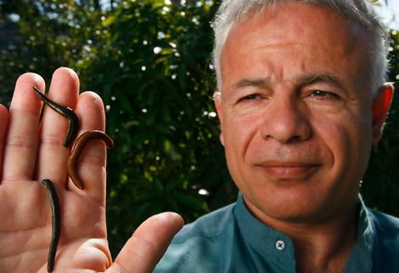
WHEN Mehdi Jaffari was told his left carotid artery was so severely blocked he faced the risk of an imminent stroke, he turned the clock back to medieval times. The 52-year-old counsellor, from Chatswood, bought more than 35 leeches from a Victorian farmer and applied them to his body daily. Within five days, a CT angiogram showed the artery had cleared, stunning staff at Royal North Shore Hospital and his family. Leech therapy, first documented in Greece more than 4000 years ago, is not new in Sydney. More than 50 Richardsonianus australis leeches are kept in a tank at Liverpool Hospital for use on patients who have had skin grafts or severed digits because their saliva contains hirudin, a chemical that acts as a powerful anticoagulant and vasodilator. read Kate Benson's full piece in the Sydney Morning Herald (via 3 Quarks Daily)
Red Wine: More Good News FINE food sings on the palate, but pairing it with the right wine creates a chorus. Among those in the know, the plum, chocolate and spice flavours of Cabernet Sauvignons, Merlots, Pinot Noirs and Sangioveses best accentuate the rich flavours of red meats. Now, however, a group of researchers led by Joseph Kanner of the Hebrew University of Jerusalem has discovered that pairing red wines like these with red meat appears to be more than just a matter of taste. If the two mix in the stomach, compounds in the wine thwart the formation of harmful chemicals that are released when meat is digested. The idea that red wine is actually good for your health is irresistible to the average tippler. But it appears to be true. In particular, red wines are rich in polyphenols, a group of powerful antioxidants that are thought to protect against cancer and heart disease by destroying molecules that would otherwise damage cells. How the polyphenols in wine exercise their beneficial effects, though, has been mysterious. That is because they do not seem to travel in any quantity from the stomach into the bloodstream. The answer, Dr Kanner has found, lies in the stomach itself. read on in The Economist
Tilapia? Not So Good For You, Perhaps WINSTON-SALEM, N.C. – Farm-raised tilapia, one of the most highly consumed fish in America, has very low levels of beneficial omega-3 fatty acids and, perhaps worse, very high levels of omega-6 fatty acids, according to new research from Wake Forest University School of Medicine. The researchers say the combination could be a potentially dangerous food source for some patients with heart disease, arthritis, asthma and other allergic and auto-immune diseases that are particularly vulnerable to an "exaggerated inflammatory response." Inflammation is known to cause damage to blood vessels, the heart, lung and joint tissues, skin, and the digestive tract. "In the United States, tilapia has shown the biggest gains in popularity among seafood, and this trend is expected to continue as consumption is projected to increase from 1.5 million tons in 2003 to 2.5 million tons by 2010," write the Wake Forest researchers in an article published this month in the Journal of the American Dietetic Association. They say their research revealed that farm-raised tilapia, as well as farmed catfish, "have several fatty acid characteristics that would generally be considered by the scientific community as detrimental." Tilapia has higher levels of potentially detrimental long-chain omega-6 fatty acids than 80-percent-lean hamburger, doughnuts and even pork bacon, the article says. "For individuals who are eating fish as a method to control inflammatory diseases such as heart disease, it is clear from these numbers that tilapia is not a good choice," the article says. "All other nutritional content aside, the inflammatory potential of hamburger and pork bacon is lower than the average serving of farmed tilapia." The article notes that the health benefits of omega-3 fatty acids, known scientifically as "long-chain n-3 polyunsaturated fatty acids" (PUFAs), have been well documented. The American Heart Association now recommends that everyone eat at least two servings of fish per week, and that heart patients consume at least 1 gram a day of the two most critical omega-3 fatty acids, known as EPA (eicosapentaenoic acid) and DHA (docosahexaenoic acid). But, the article says, the recommendation by the medical community for people to eat more fish has resulted in consumption of increasing quantities of fish such as tilapia that may do more harm than good, because they contain high levels of omega-6 fatty acids, also called n-6 PUFAs, such as arachidonic acid. "The ratio of arachidonic acid (AA) to very long-chain n-3 PUFAs (EPA and DHA) in diets of human beings appears to be an important factor that dictates the anti-inflammatory effects of fish oils," the researchers write. They cite numerous studies, including a recent one that predicts "that changes in arachidonic acid to EPA or DHA ratios shift the balance from pro-inflammatory [agents] to protective chemical mediators … which are proposed to play a pivotal role in resolving inflammatory response" in the body. For their study, the authors obtained a variety of fish from several sources, including seafood distributors that supply restaurants and supermarkets, two South American companies, fish farms in several countries, and supermarkets in four states. All samples were snap-frozen for preservation pending analysis, which was performed with gas chromatography. The researchers found that farmed tilapia contained only modest amounts of omega-3 fatty acids – less than half a gram per 100 grams of fish, similar to flounder and swordfish. Farmed salmon and trout, by contrast, had nearly 3 and 4 grams, respectively. At the same time, the tilapia had much higher amounts of omega-6 acids generally and AA specifically than both salmon and trout. Ratios of long-chain omega-6 to long-chain omega-3, AA to EPA respectively, in tilapia averaged about 11:1, compared to much less than 1:1 (indicating more EPA than AA) in both salmon and trout. The article notes that "there is a controversy among scientists in this field as to the importance of arachidonic acid or omega-6:omega-3 ratios vs. the concentration of long-chain omega-3 alone with regard to their effects in human biology." Those issues are raised in an editorial in the same issue of the Journal. The Wake Forest article anticipates that criticism and notes that one human study involving AA showed a probable gene-nutrient connection to coronary heart disease in a specific group of heart disease patients. In another study, four subjects were removed after consumption of high amounts of AA due to concerns about the effect of the acid on their blood platelets. Floyd H. "Ski" Chilton, Ph.D., professor of physiology and pharmacology and director of the Wake Forest Center for Botanical Lipids, is the senior author of the Journal article. He said that in next month's Journal, he will publish a rebuttal to this month's editorial. "We have known for three decades that arachidonic acid is the substrate for all pro-inflammatory lipid mediators," Chilton said in an interview. "The animal studies say unequivocally that if you feed arachidonic acid, the animals show signs of inflammation and get sick. "A New England Journal of Medicine article three years ago said if you had heart disease and had a certain genetic makeup, and you ate arachidonic acid, the diameter of your coronary artery was smaller, a major risk factor for a heart attack," said Chilton. "My point is that it's likely not worth the risk in this or other vulnerable populations." Chilton said tilapia is easily farmed using inexpensive corn-based feeds, which contain short chain omega-6s that the fish very efficiently convert to AA and place in their tissues. This ability to feed the fish inexpensive foods, together with their capacity to grow under almost any condition, keeps the market price for the fish so low that it is rapidly becoming a staple in low-income diets. "We are all familiar with the classical Hippocratic admonition, Primum no nocere, 'First, do no harm.' I think it behooves us to consider this critical directive when making dietary prescriptions for the sake of health," Chilton said. "Cardiologists are telling their patients to go home and eat fish, and if the patients are poor, they're eating tilapia. And that could translate into a dangerous situation." via Muck and Mystery
Regional Purity In today's excerpt--country music was an oral history of the urban poor from California to New England, argues author Dana Jennings, not just the South-- especially in the pivotal period from 1950 to 1970. These were the years of Hank Williams, Sr., Patsy Cline, Johnny Cash and many more now legendary performers: "Country music for decades was poor-people music, made by poor people, and bought by poor people. It sprang from the heart and the gut, and, like R&B and soul, it was the music of exile, meant to make being banished to the margins, if not a matter of pride, then at least more tolerable. It never surprised anyone that the original Carter Family came from Poor Valley. In a sense, that's where we all came from. ... People forget, or never knew, the poverty that once suffused country music. There are the songs that are explicitly about being poor, like [Merle] Haggard's 'Hungry Eyes' and Harlan Howard's 'Busted,' but poverty is also the silent pillar of lots of other country songs. In America, it's poor boys who most often wind up in prison, and it's among the poor that alcoholism is an epidemic. When you're poor, cheatin' isn't just adultery, it's stealin'. ... "Which brings me to 'The Myth.' The myth, perpetuated these days by Nashville music executives who probably believe that Garth Brooks represents 'classic country,' is that country music is purely a white, rural, and Southern art. ... There's no question that the South is vital to country music and its history. But the scholar D.K. Wilgus reminds us that while country music's manifestation was Southern, 'its essence was of rural America.' ... Country musicians come from all over: Hank Snow, one of the music's biggest postwar stars, was from Nova Scotia; Merle Haggard and Buck Owens, who owned the charts in the 1960s, defined the Bakersfield, California sound; Willie Nelson and Waylon Jennings?-Texans through and through; and heck, Dick ('A Tombstone Every Mile') Curless hailed from Fort Fairfield, Maine. "And the African-American influence runs strong and deep in musicians as diverse as Bill Monroe, Bob Wills, Jimmie Rodgers, Hank Williams, and Elvis Presley, whose first hits came on the country charts. Hank's breakthrough, 'Lovesick Blues' (1949), was written by a vaudeville piano player and a Russian-born Jew and popularized in the 1920s in the 1920s by minstrel Emmitt Miller. So much for regional purity." – Dana Jennings, Sing Me Back Home, Faber and Faber, Copyright 2008 by Dana Jennings, pp. 19-24. via Richard Vague's excellent Delancey Place
Pensive Kitty
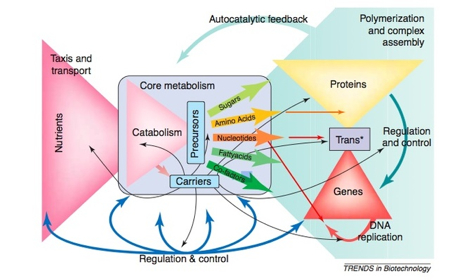
BOW-TIE CONTROL SYSTEMS
The rapid growth of global guerrillas (the systems disrupting, crime fueled sons of global fragmentation), non-bank financial firms (hedge funds and investment banks that are cumulatively known as the "shadow banking system"), and cybercriminals can be explained by a fundamental restructuring of our global economic, energy, and communications system. In a little over a decade, this collection of relatively isolated systems (markets and networks) firmly ensconced within nation-state regulatory/legal structures (political economies and national networks) have merged into a single fluid global system (absent any meaningful global governance). This new structure has enabled a form of parasitic predation by these newly empowered participants, that puts the entire global order at risk. If we look at this new global system from a distance, its architecture is something called a Bow-Tie (aka "Platform"). This is a form of universal control system architecture that underlies complex systems from the Internet to cell metabolism (for background, read the excellent article, "Bow ties, metabolism, and disease" by Caltech's Marie Csete and John Doyle). While Bow-Tie architectures existed within the nation-state system, it was organically intertwined with political controls. This new system is devoid of those organic connections. It's pure. The Bow-Tie architecture has the following features: * Nearly unlimited scalability. The ability to accept a wide variety of inputs (the left bow) and convert them into a small set of universal building blocks (the knot). This, in combination with protocols for interconnection, enable a plug-and-play approach to building a wide variety of outputs (the right bow). * Robust and evolvable at the same time. As environments change in the short term, new combinations can be made from the basic building blocks and protocols to meet new demands. Additionally, since the system is shared, any evolutionary innovation quickly propagates across the entire system. * Fragility. The entire system is vulnerable to changes, perturbations, and hijacking within the core set of building blocks and protocols. more from the cutting-edge mind of John Robb
I think it’s the duty of the comedian to find out where the line is drawn and cross it deliberately. *** That’s why they call it the American Dream. You have to be sleeping to believe it. *** I look at it this way… For centuries now, man has done everything he can to destroy, defile, and interfere with nature: clear-cutting forests, strip-mining mountains, poisoning the atmosphere, over-fishing the oceans, polluting the rivers and lakes, destroying wetlands and aquifers… so when nature strikes back, and smacks him on the head and kicks him in the nuts, I enjoy that. I have absolutely no sympathy for human beings whatsoever. None. And no matter what kind of problem humans are facing, whether it’s natural or man-made, I always hope it gets worse. – George Carlin
George Carlin (May 12, 1937 – June 22, 2008) on the first Gulf war...
Spiraling Downward The U.S. economy, that is. I'm sorry to say that in stark contrast to the phony optimism found in the mainstream business media, many of the most serious and knowledgeable observers paint a very different picture of the current conditions, and the road ahead. Michael Hudson is a former Wall Street economist specializing in the balance of payments and real estate at the Chase Manhattan Bank (now JPMorgan Chase & Co.), Arthur Anderson, and later at the Hudson Institute (no relation). His penetrating views, including those excerpted below, should be read by anyone who wants to benefit from a clear-eyed analysis. Mike Whitney: According to most estimates, the Fed has already gone through half or more of its $900 billion balance sheet. Also, according to the latest H.4.1 data "the current holdings of Treasury bills is $25 billion. This is down from some $250 billion a year ago, or a net reduction of 90 per cent." (figures from Market Ticker) Doesn't this suggest that the Fed is just about out of firepower when it comes to bailing out the struggling banking system? Where do we go from here? Will some of the larger banks be allowed to fail or will they be nationalized? Michael Hudson: You need to look at what the Treasury as well as the Fed is doing. The Fed can monetize whatever it wants. And as you just pointed out in the preceding question, it has been buying junk securities in order to leave sound Treasury securities on the banking system’s balance sheets. Government bailout credit will keep the big banks alive. But many small regional banks will go under and be merged into larger money-center banks – just as many brokerage firms in recent decades have been merged into larger conglomerates. False reporting also will help financial institutions avoid the appearance of insolvency. They will seek more and more government guarantees, ostensibly to help middle-class depositors but actually favoring the big speculators who are their major clients. What we are seeing is the creation of a highly concentrated financial oligarchy – precisely the power that the Glass-Steagall Act was designed to prevent. A combination of deregulation and “moral hazard” bailouts – for the top of the economic pyramid, not the bottom – will polarize the economy all the more. Cities and states will preserve their credit ratings by annulling their pension obligations to public-sector workers, and raising excise taxes – but not property taxes. These already have fallen from about two-thirds of local budgets in 1930 to only about one-sixth today – that is, a decline of 75 percent, proportionally. While the debt burden and the squeeze in disposable personal income is pressuring workers, finance and property are using the crisis to get a bonanza of tax relief. Democrats in Congress are as far to the right as George Bush on this, as their base is local politics and real estate. [snip] Mike Whitney: Many of the TV financial gurus --as well as Henry Paulson--keep assuring us that the worst is behind us, but I don't see it. Foreclosures are increasing, the dollar is falling, unemployment is rising, manufacturing is sluggish, food and fuel are soaring, and consumers are backed up on their credit cards, student loans and house payments. Where would you say we are in the present cycle? What will it take to rebound from the current slump? Will the stock market take a beating before all this is over? What do you think the greatest problem facing the economy is; inflation or deflation? Michael Hudson: The idea that we’re even in a business “cycle” is whistling in the dark. If we’re in a cycle, then that implies there’s an automatic recovery in store. This happy free-market idea was developed at the National Bureau of Economic Research by opponents of government regulatory policy. But the economy doesn’t move by a sine curve. There is a slow buildup, and a sudden plunge, so the shape is ratchet-shaped. This is why 19th-century writers didn’t speak of economic cycles, but rather of periodic financial crises. Today’s plunging real estate and stock market prices are not a self-correcting ebb and flow in which downturns set in motion automatic stabilizers that produce recovery. Each U.S. recovery since World War II has started out from a higher level of debt. The result is like driving a car with the brakes pressed more and more tightly. Alan Greenspan at the Federal Reserve flooded the banking system with enough credit to enable debts to be carried by borrowing against the rising price of homes and office buildings, corporate stocks and bonds. In effect, the interest charge was simply added onto the debt balance. But today, the prospects are dim for paying off debts out of further price gains for homes and real estate. Speculators have pulled out of the market – and as late as 2006 they accounted for about a sixth of new purchases. Asset-price inflation fueled by the Federal Reserve – is giving way to debt deflation. The United States and other countries have reached a limit in which scheduled interest and amortization absorb the entire economic surplus of so many individuals, companies and government bodies that new construction, investment and employment are grinding to a halt. Families, real estate investors and companies are obliged to use their entire disposable income to pay their creditors or face bankruptcy. This leaves them without enough money to sustain the living standards of recent years. This means that there won’t be a rebound, and it will take longer than 2009 to recover. the full interview can be read at Counterpunch
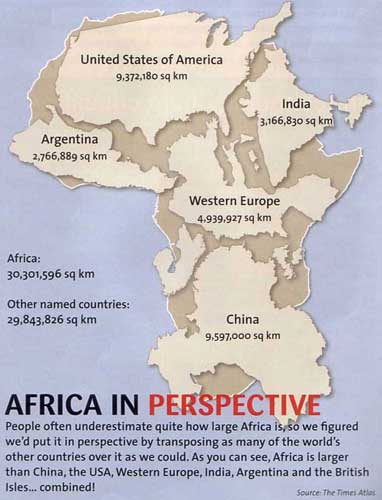
How Big Is Africa?
via doobybrain.com
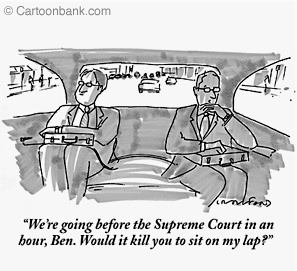
The New Yorker's Cartoon Bank
A Few Too Many Some words for hangover, like ours, refer prosaically to the cause: the Egyptians say they are "still drunk," the Japanese "two days drunk," the Chinese "drunk overnight." The Swedes get "smacked from behind." But it is in languages that describe the effects rather than the cause that we begin to see real poetic power. Salvadorans wake up "made of rubber," the French with a "wooden mouth" or a "hair ache." The Germans and the Dutch say they have a "tomcat," presumably wailing. The Poles, reportedly, experience a "howling of kittens." My favorites are the Danes, who get "carpenters in the forehead." In keeping with the saying about the Eskimos' nine words for snow, the Ukrainians have several words for hangover. And, in keeping with the Jews-don’t-drink rule, Hebrew didn’t even have one word until recently. Then the experts at the Academy of the Hebrew Language, in Tel Aviv, decided that such a term was needed, so they made one up: hamarmoret, derived from the word for fermentation. (Hamarmoret echoes a usage of Jeremiah’s, in Lamentations 1:20, which the King James Bible translates as “My bowels are troubled.”) There is a biochemical basis for Jewish abstinence. Many Jews—fifty per cent, in one estimate—carry a variant gene for alcohol dehydrogenase. Therefore, they, like the East Asians, have a low tolerance for alcohol. many more insights into hangovers from The New Yorker
Have you ever seen a creature which was simultaneously so adorable and bizarre looking? It's a Tarsier (via arbroath)
Size 10 From the occasionally amusing classifieds in the London Review of Books: This time next week you’ll think replying to this advert was the best decision you’ve ever made. At the same time you’ll be regretting your choice of footwear. Why? Because dark soles aren’t allowed on my mother’s newly laid laminates. Don’t worry, I’ve already bought you slippers (size four) and pyjamas (size 10) and a brush for your beautiful long red hair (I’ve had ‘Susan’ engraved on the handle, that’s what I’d like to call you). Size 10 Susans with size four feet, please, reply to box no. 10/02 You can be any age but if you’re 42 with a birthday on September 6 it will be a distinct advantage. Otherwise we can just pretend. box no. 10/02
Whodathunkit?
I mean, really, who would have guessed that sea slugs could be so extraordinarily beautiful? Enjoy a dazzling array of them at National Geographic
Chloe Chloe came into my life on a brilliant October day thirteen years ago. My wife and I were transporting some furniture in my pickup truck to stash at her folks’ summer place in the heart of the Adirondacks. We’d reached a stretch of rather desolate two-lane county road when a reddish-brown blur caught my eye in the margin of the woods at the right side of the road. Then I felt a thump and looked back and saw an animal squirming in pain on the blacktop behind us. It issued a horrible, elongated, squealing cry. I ran maybe thirty yards back to it, saw that it was a dog, and bent down to it. There were no houses anywhere in sight. I didn’t know what to do. By some desperate reflex, I scooped the animal up in my arms, ran back to the truck, and set off in search a vet. My wife took the wheel and we turned south heading for the nearest town of consequence, Warrensburg. I held the dog on my lap. It weighed no more than twenty pounds and was no breed I recognized. It had stopped squealing and squirming, but yelped whenever the truck hit a bump. A little blood ran from its mouth onto my pants. Its eyes were alert. I kept petting it and telling it that everything was going to be all right -- you just do, whether you believe it or not, and I really didn’t know -- and I couldn’t help but notice what a beautiful dog this was. Her eyes were so deep and lovely. As it happened, there was nobody around the vet’s office in Warrensburg, so we drove all the way back to Saratoga Springs, where we’d started that day, to the vet who took care of our cats. They took the mystery dog into emergency treatment and I signed to take responsibility for the bill. A few hours later they called us at home to report. The dog, a female, had a fractured pelvis and tailbone, no other internal injuries besides a general bruising and shock. They wouldn’t put her into a cast. I could take her home, they said, and keep her very quiet for a month or so, and she would probably recover fully. They estimated that she was about six months old, mixed breed, possible beagle and golden retriever, they couldn’t really say, just a mutt. A strange destiny seemed to be at work in this situation. I would take this injured dog in, at least for a month, it now appeared. I had never owned a dog. read the rest of author Jim Kunstler's touching memorial to his dog Chloe (via 3 Quarks Daily)
Convenience, at a Potentially Big Price
Women who use mobile phones when pregnant are more likely to give birth to children with behavioural problems, according to authoritative research. A giant study, which surveyed more than 13,000 children, found that using the handsets just two or three times a day was enough to raise the risk of their babies developing hyperactivity and difficulties with conduct, emotions and relationships by the time they reached school age. And it adds that the likelihood is even greater if the children themselves used the phones before the age of seven. The results of the study, the first of its kind, have taken the top scientists who conducted it by surprise. But they follow warnings against both pregnant women and children using mobiles by the official Russian radiation watchdog body, which believes that the peril they pose "is not much lower than the risk to children's health from tobacco or alcohol". The research – at the universities of California, Los Angeles (UCLA) and Aarhus, Denmark – is to be published in the July issue of the journal Epidemiology and will carry particular weight because one of its authors has been sceptical that mobile phones pose a risk to health. [snip] The scientists questioned the mothers of 13,159 children born in Denmark in the late 1990s about their use of the phones in pregnancy, and their children's use of them and behaviour up to the age of seven. As they gave birth before mobiles became universal, about half of the mothers had used them infrequently or not at all, enabling comparisons to be made. They found that mothers who did use the handsets were 54 per cent more likely to have children with behavioural problems and that the likelihood increased with the amount of potential exposure to the radiation. And when the children also later used the phones they were, overall, 80 per cent more likely to suffer from difficulties with behaviour. They were 25 per cent more at risk from emotional problems, 34 per cent more likely to suffer from difficulties relating to their peers, 35 per cent more likely to be hyperactive, and 49 per cent more prone to problems with conduct. read on in The Independent (U.K.)
More other? click here! •••
|
|
books
daily reads
film
favorite posts pinter on politicians' language
music
art
archives
|
| ©2005 Tony. All rights reserved. | Website
designed by JSVisuals.com |